What is so Great about Napa Valley and its Wines?
A Mosaic of Sunlight
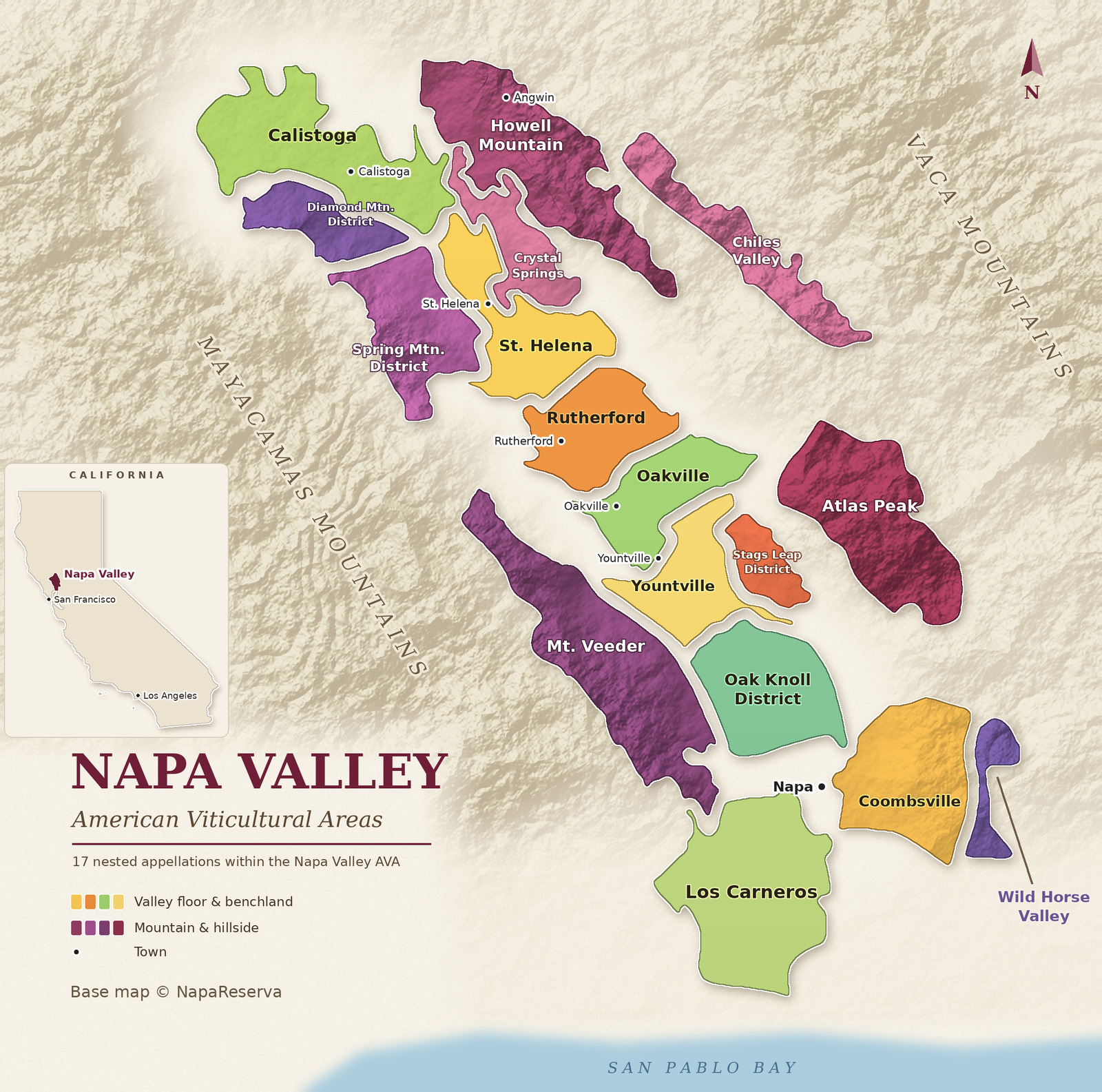
Napa Valley is only about 30 miles long, yet it holds an astonishing range of growing conditions. Sheltered between two mountain ranges, its benches, slopes and side canyons each catch the sun at a different angle and for a different length of the day. These pockets of light and warmth create distinct terroirs, often just a short drive apart, which is why the valley is divided into 16 nested AVAs. A Cabernet from cool, breezy Carneros will taste nothing like one from sun-drenched Calistoga, even though they share the same valley.

Cool Mornings, Warm Afternoons
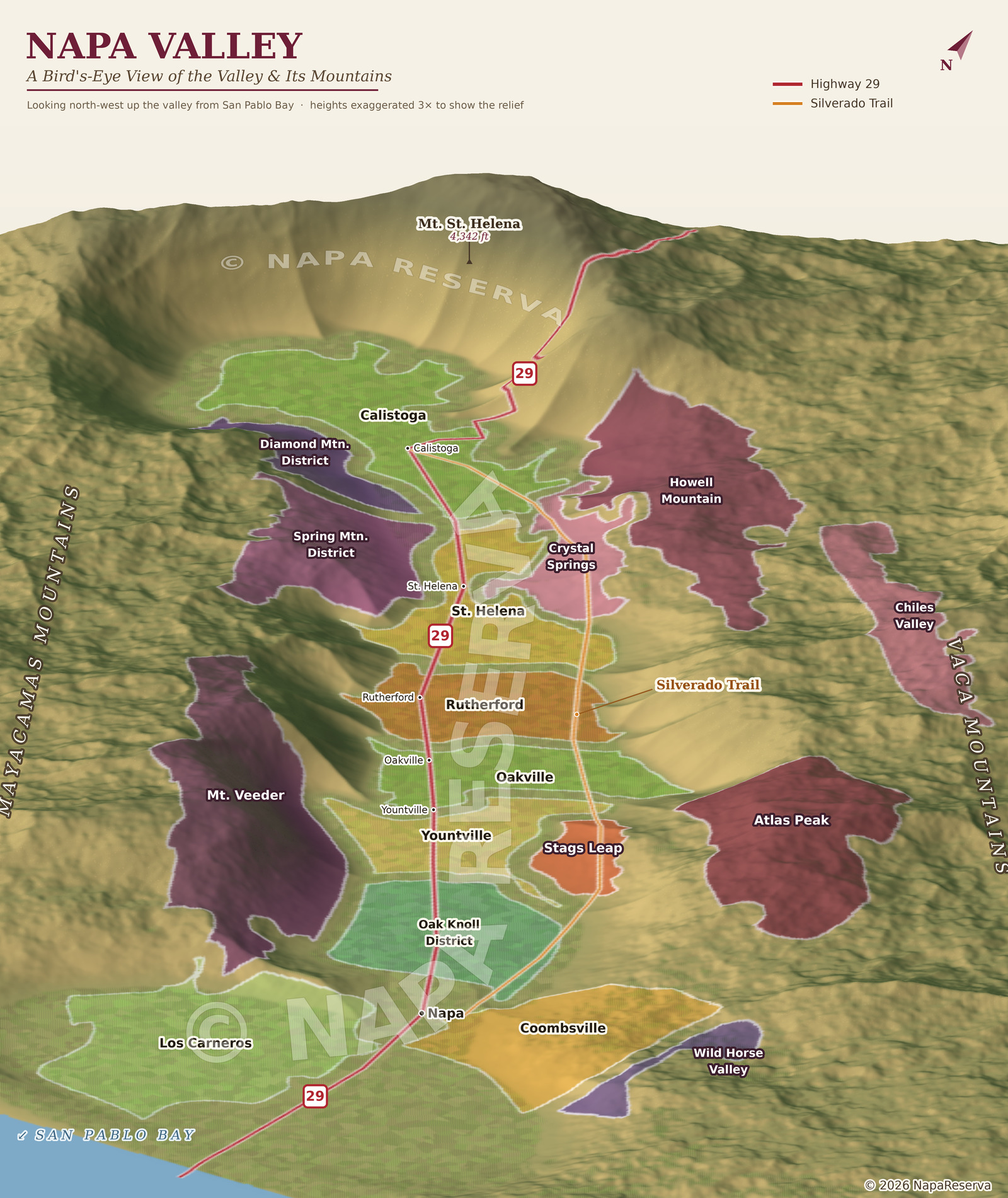
Napa’s climate is a gift from the Pacific. On summer mornings, fog and cool air roll in from San Pablo Bay, blanketing the southern valley and keeping the vines refreshed. By afternoon the fog burns away and the sun shines with full intensity, ripening the fruit to lush perfection. Temperatures can swing 40°F or more between day and night. That daily rhythm of cool and warm lets grapes build deep color, rich flavor and ripe tannins while holding on to the bright acidity that keeps a wine fresh and age-worthy.
Soils of Remarkable Diversity
Beneath the vines lies some of the most varied ground in the wine world. Napa is home to roughly half of the world’s soil orders, shaped over millions of years by ancient seabeds, volcanic eruptions and rivers washing down from the mountains. Volcanic soils on the slopes of the Vaca and Mayacamas ranges give wines depth and minerality. Well-drained gravel and loam on the alluvial benches of Rutherford and Oakville produce the famous “Rutherford dust.” Clay and marine sediments in the south lend structure and richness. Each block of soil leaves its own fingerprint in the glass.
The Hillside Advantage
High on Howell Mountain, Spring Mountain, Mt. Veeder and Atlas Peak, vines live a harder life, and that struggle is their strength. Many of these vineyards sit above the fog line, basking in steady sunshine while enjoying cooler nights. Thin, rocky soils hold little water, forcing roots to dig deep into the bedrock in search of moisture and nutrients. The vines produce fewer, smaller berries with thicker skins, concentrating flavor, color and structure. The result is mountain wine of intensity and power, with the depth to age gracefully for decades.
Two Sides of the Valley
Even the two sides of the valley ripen grapes differently. Vineyards along the western Mayacamas slopes catch the gentle morning sun and fall into shade in the late afternoon, which gives their wines elegance and finesse. Across the valley, the eastern foothills of the Vaca range soak up the hot afternoon sun, producing bolder, riper and more powerful wines. Two vineyards facing each other across the valley floor can taste worlds apart.
A Long, Dry Growing Season
Napa enjoys a true Mediterranean climate: mild, wet winters and long, dry, sunny summers. Rain rarely falls during the growing season, so grapes can hang on the vine well into autumn and ripen slowly and evenly. Growers can pick each block at its peak instead of racing the weather.

The Home of Cabernet Sauvignon
No grape has found a happier home in Napa than Cabernet Sauvignon. The valley’s warm, dry summers, well-drained soils and cool nights suit this late-ripening variety perfectly, letting it develop ripe dark fruit, supple tannins and remarkable aging potential. Napa Cabernet has become a benchmark for the grape worldwide, admired alongside the great wines of Bordeaux.
Small in Size, Big in Reputation
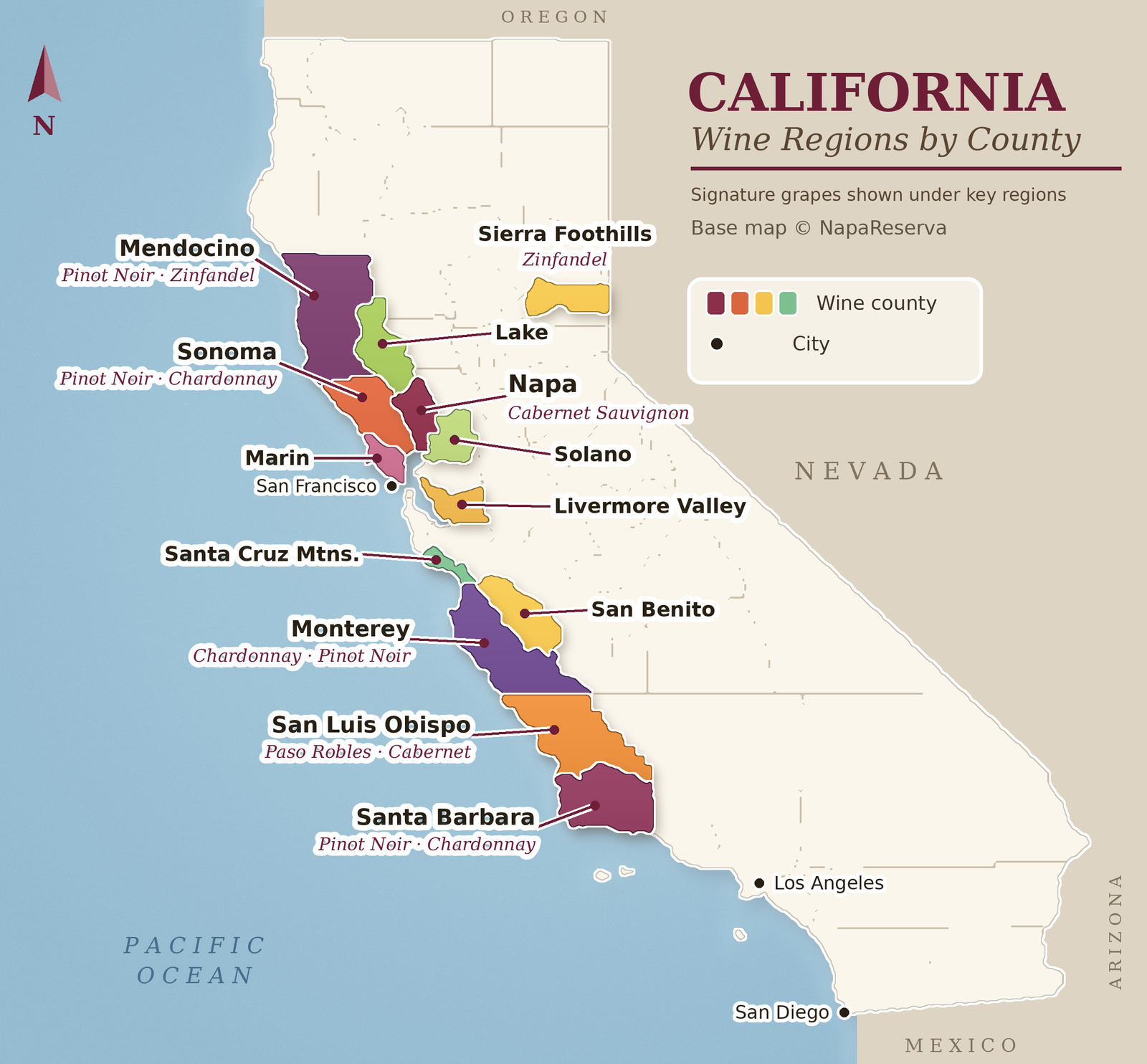
For all its fame, Napa produces only about 4% of California’s wine grapes. Its place on the world stage was sealed in 1976, when Napa wines outscored the best of France in the legendary Judgment of Paris tasting. Since then, generations of growers and winemakers have refined their craft vineyard by vineyard, making this small valley one of the most celebrated wine regions on earth.