What a Napa Valley Wine Label can tell you?
There can be a lot or little information a wine label can tell you. Knowing exactly what to look for in a wine label can go a long way in selecting a perfect wine for your occasion, not to mention saving some money for more even more wines later.
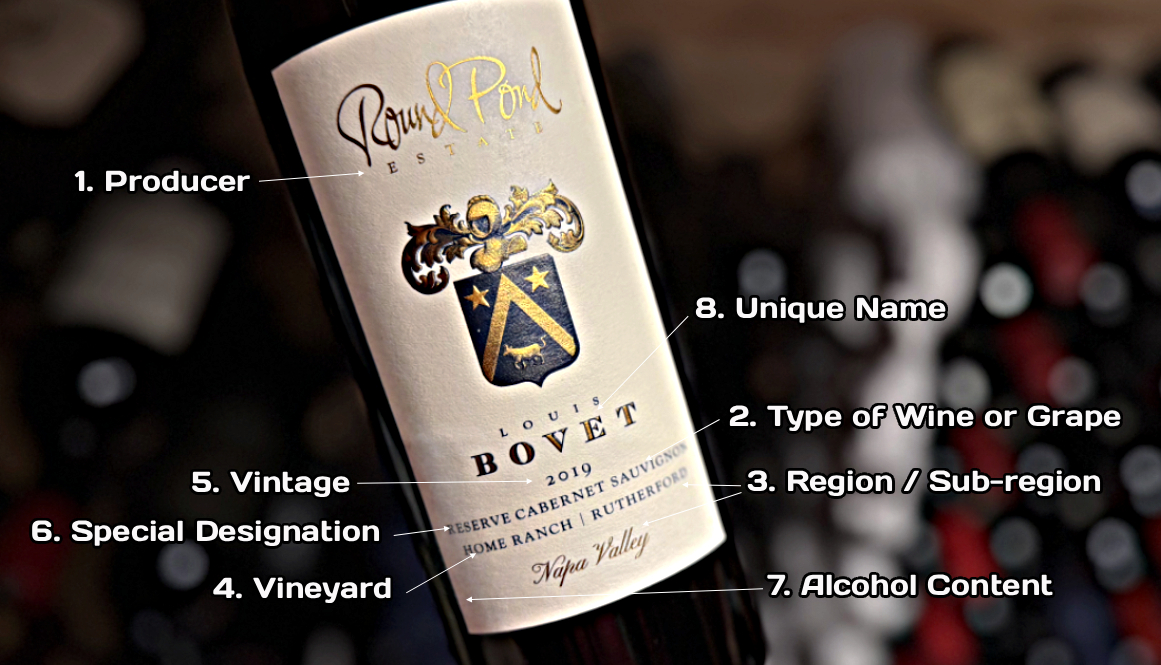
The first 4 items are perhaps the most significant when it comes to extracting information from the label, so let’s jump right in.

1. The Producer
Names of producers could vary from name of the estate, or winery, or cellars. Regardless, for obvious reason, this can be a strong indication of its quality. Some wineries only produce two different wines, just by seeing their name can say a lot about the wine.
Well known wine such as Screaming Eagle doesn’t list anything else on their front label and wine enthusiasts know exactly.
2. Type of Wine or Grape
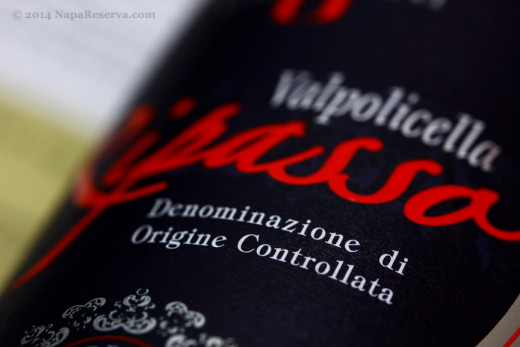
In California and New World regions, names of grapes are often displayed, while Old World regions would display the regions where the wines come from. These regions have strict regulations on which grapes can be permitted to be used for wine making.
In California, if a label says” Cabernet Sauvignon”, its content must contain at least 75% of wine made from Cabernet Sauvignon.
3. Region / Sub-region
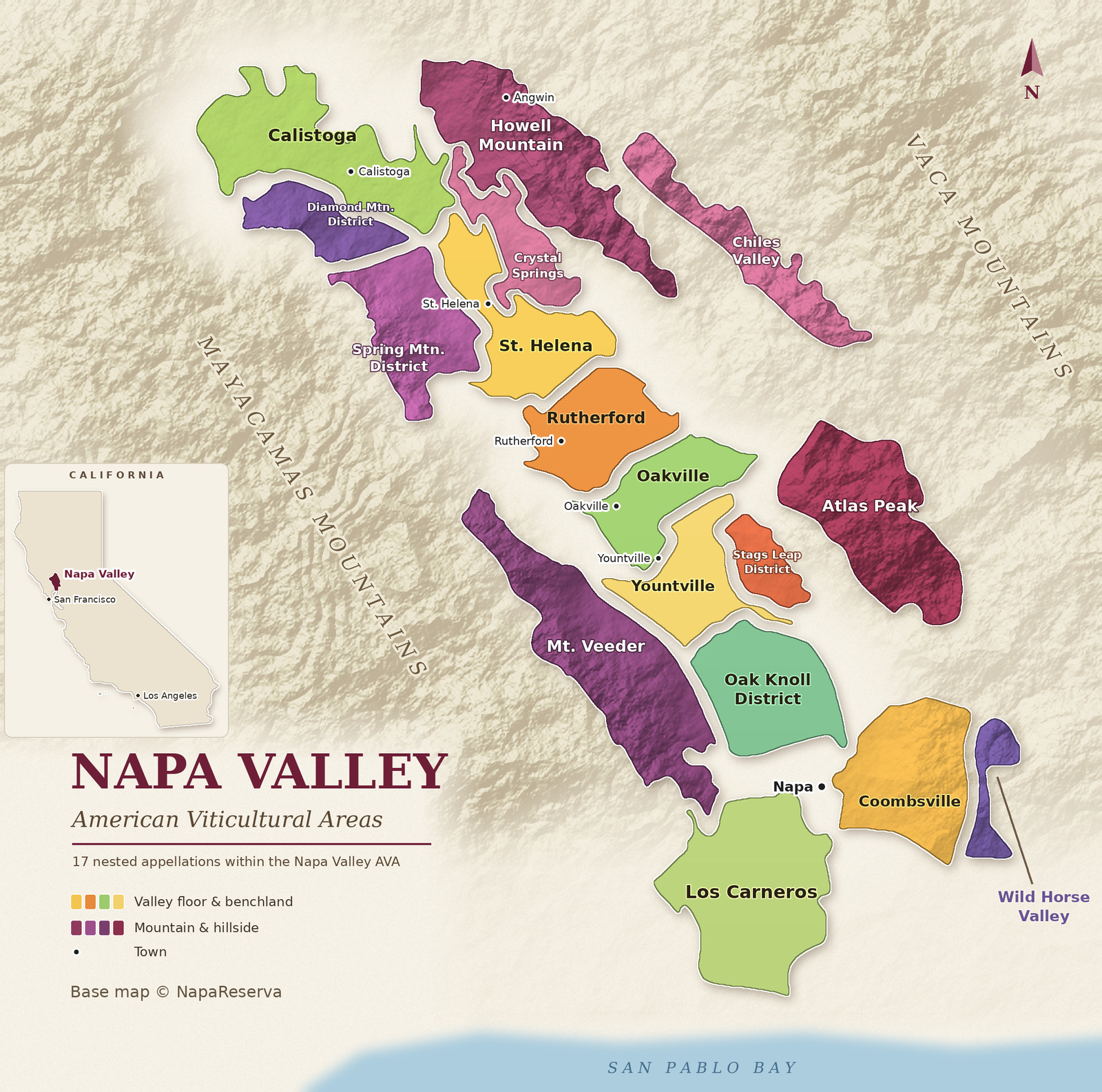
Wine quality tends to increase when grapes are sourced from smaller designated region. In California, quality of wine will go up and so will their prices when it is labeled this is order California → County → AVA (American Viticultural Appellation) → Sub-AVA → Vineyard. For example: California → Napa Valley → Oakville → To Kalon.
In the US, 85% of grapes must come from a state in order to carry its name. California is different. If “California” appears as the appellation, all the grapes must be grown in California (100% state fruit).
County Appellation is California requires 75% of grape must come from said County. For AVA designation, 85% of grapes must come from said AVA.
4. Vineyard
To legally put a vineyard name on a wine label:

At least 95% of the grapes must come from the named vineyard
The remaining 5% can come from elsewhere only if it doesn’t change the character
Vineyard Must Be Within the Appellation
You cannot name a vineyard unless the label also carries a valid appellation of origin
The vineyard must be entirely located within the stated AVA or appellation
5. Vintage
The year wine was made. In California, this carries some but less significance due to consistent climate condition, maybe 2 out of 10 years, Napa Valley may experience unfavorable conditions that could compromise its wine quality. In Bordeaux, France, it is quite opposite. Harsh and early winter seasons are more frequent and could hurt growing conditions.
6. Special Designations
“Reserve” often appear on wine label, it is not a regulated term. But, producers would label reserve for their higher quality wines. “Special”, “Select”, “Proprietor”, “Founder’s blend” etc. These terms are not regulated but certainly are reserved for higher quality wines.
7. Alcohol Content
Often written in small print, in Napa Valley red wines are usually between 14-15.5% alcohol, while white wines are lower, from around 12%. Old World red wines carry much less alcohol content compared to their New World counterpart.
8. Unique Name
These terms are not regulated and it can be used for marketing purposes from the winery. However, with smaller boutique wineries, these can be more personal such as name of the favorite pet or son, or daughter.